

Wuthering Heights by Emily Bronte
Notes, Quotes, and Reflections

Welcome to Notes, Quotes, and Reflections, aka a look inside my reading journal. This week I’m logging Wuthering Heights by Emily Bronte.
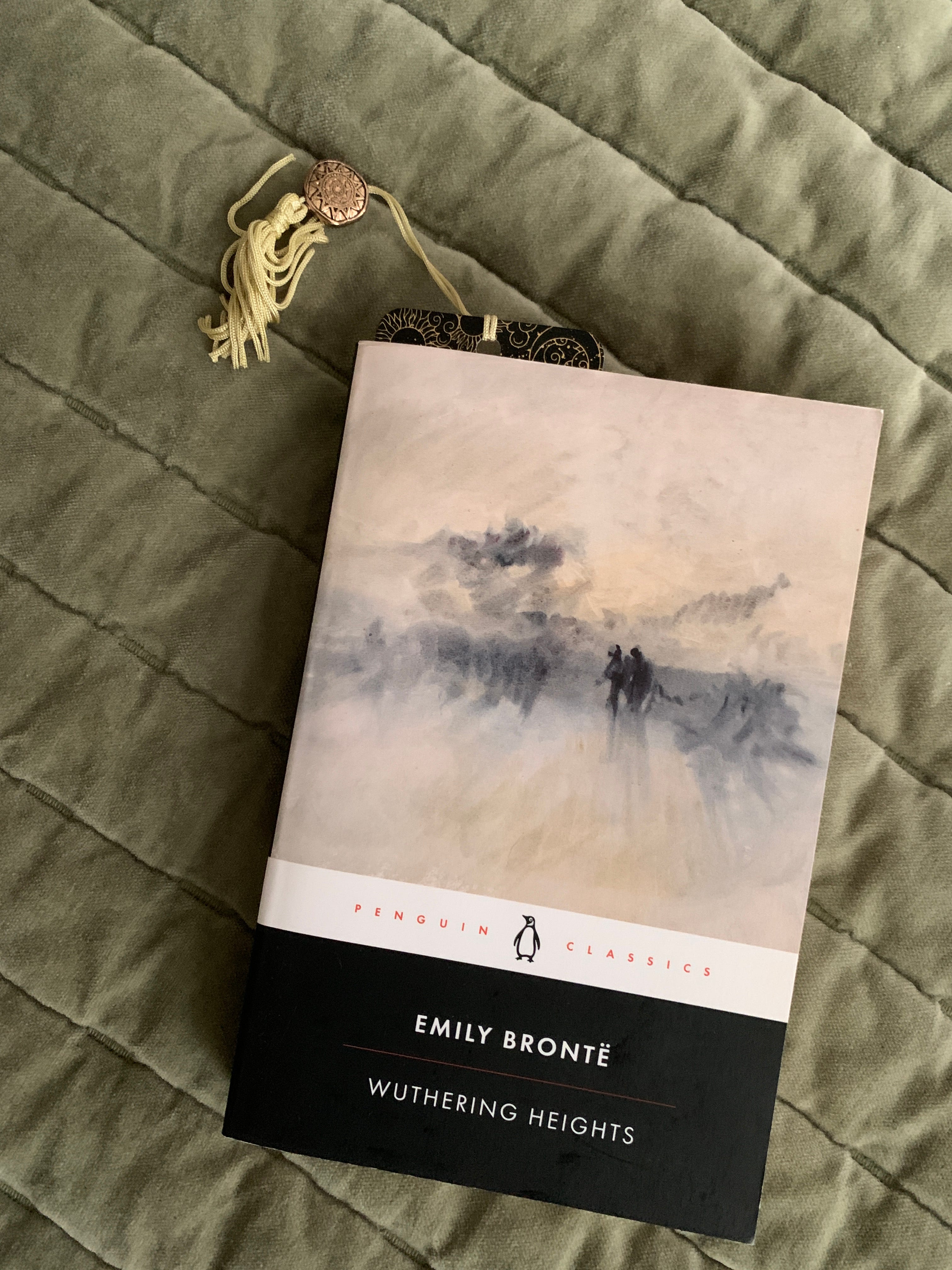
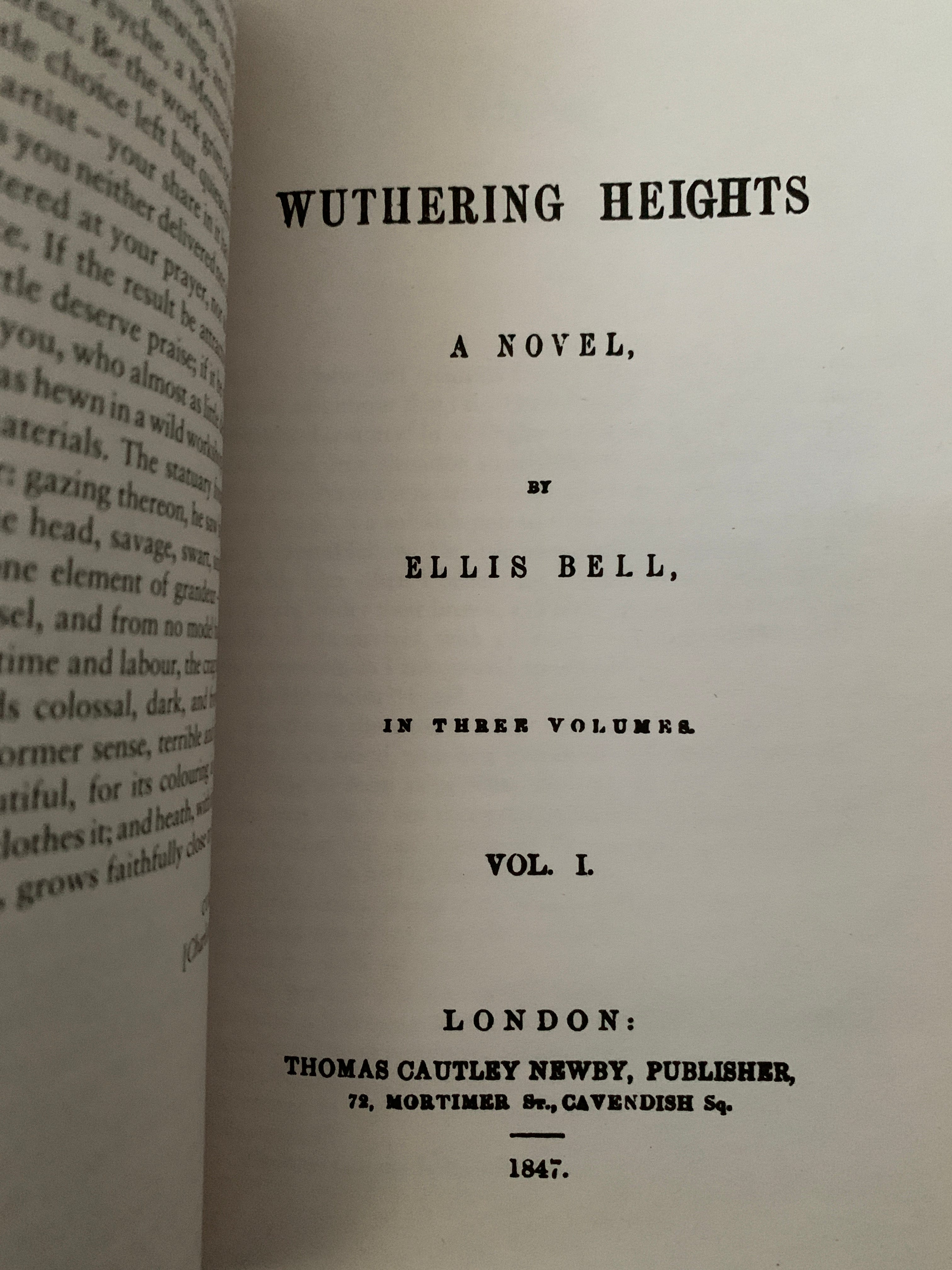
Title: Wuthering Heights
Author: Emily Bronte
Originally Published: 1847
Read Date: October 3-12, 2025
As a fan of the Gothic and the Romantic, Wuthering Heights was on my TBR for a very long time. I first picked it up in September of 2024, but only managed to get through about 100 pages. I didn’t have the mental energy to tackle it just yet, so I put it aside for another time.
Skip forward 1 year, to October 2025. With autumn on the way, I recommitted to this novel. To help me along, I listened to the audiobook, narrated by Aimee Lou Wood. I initially planned to play catch up on audio, then go back to the physical book—but Wood’s narration made the story so much more fun, I just kept listening. I highly recommend this version of the audiobook!
It seems just about everyone has been reading Wuthering Heights in anticipation of the new adaptation. I have no desire to watch it. After being so disappointed by Frankenstein, I just don’t have the capacity to endure another terrible adaptation right now—with Jacob Elordi, no less. (I have no particular qualms with this man, but must he be in everything?)
Anyways, I don’t want to make this about the movie I’m not going to see. So here are my reading notes, quotes, and reflections! Spoilers ahead, of course.
“I repeat it till my tongue stiffens - Catherine Earnshaw, may you not rest, as long as I am living! You said I killed you - haunt me, then! The murdered do haunt their murderers. I believe - I know that ghosts have wandered on earth. Be with me always - take any form - drive me mad! only do not leave me in this abyss, where I cannot find you!”
Reading Notes
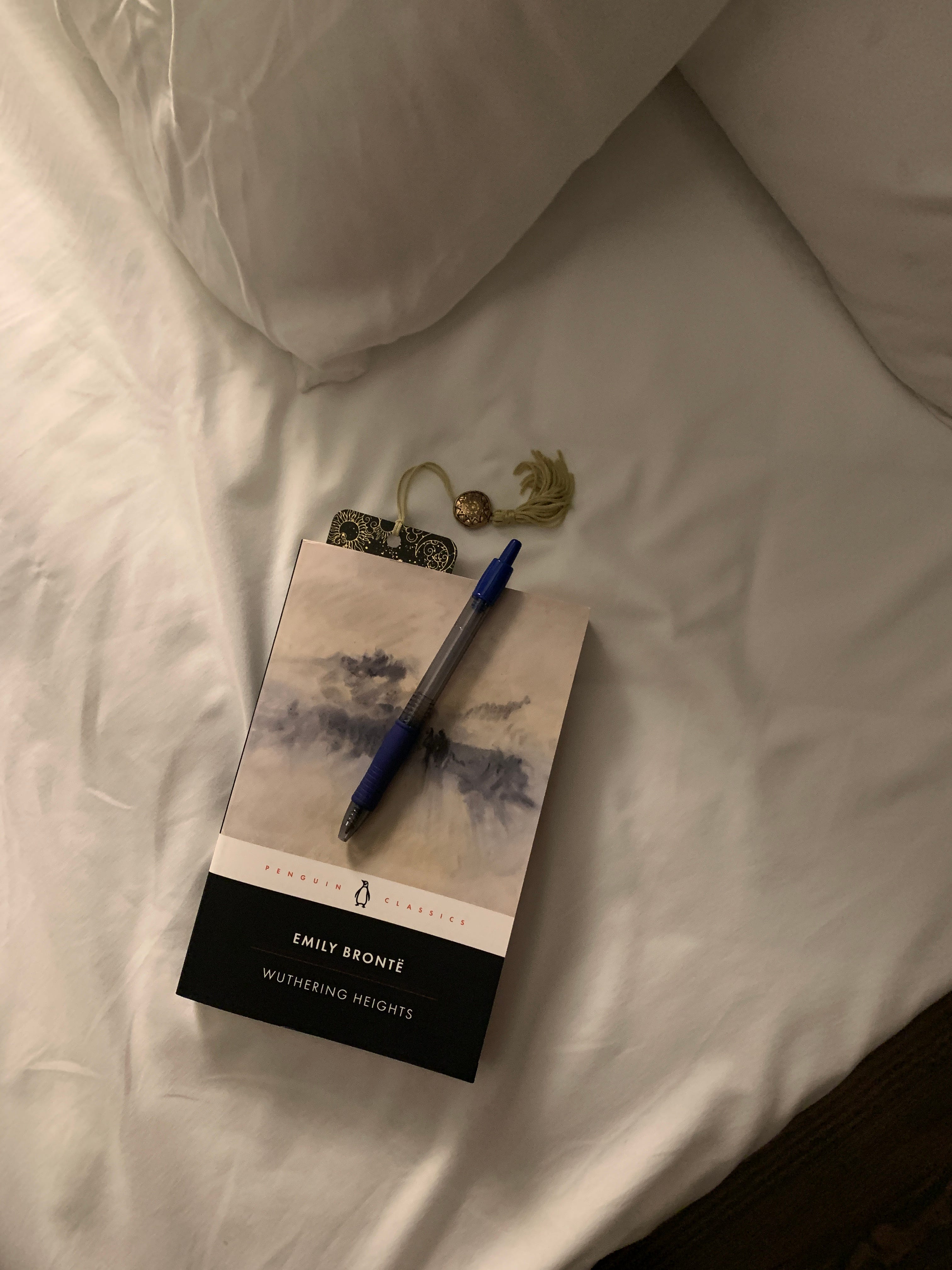
Reading Penguin Classics edition, published 1995, with intro by Paulina Nestor
Listening to audiobook performed by Aimee Lou Wood
Finally re-starting this—a whole year later!
Ok, after listening to the first couple of chapters, I am really excited about this book again.
typical Gothic framing: a narrator (Lockwood) shows up and someone retells the story to him (mostly Nelly)
the heights…they’re absolutely wuthering
I might just listen to this fully on audio, and will read along with my physical copy. I think that will help me focus, get immersed into the story, and be fully engaged with it. So I can listen and read/annotate at the same time.
Audiobook def makes this more fun and enjoyable. It brings out the personality of the narrator and the humor of it.
Caught up to where I left off last year (chapter 10)
Catherine is such a brat
Nothing but drama
Nelly is quite in the middle of it, the gossip
“becoming a woman” “instilling femininity” the dissolution of all freedoms of childhood, in order to fit into a limited social role; the weeks at Grange were essentially Catherine’s adolescence, her entrance into society. this is the turning point.
Heathcliff…yikes.
not the little dog!
Catherine-Cathy-Heathcliff-Earnshaw-Linton-Hareton-Edgar-Linton—Hindley
He’s real mad that Catherine married someone else and then died. And now his whole life is dedicated to making everyone else miserable, especially the young Catherine. Forcing her to marry his son (?). So he can obtain the estate and become landowner. Where the ghost of Catherine resides!
I no longer remember what I expected from this story…but this wasn’t quite it.
This story is not a good example of “love”, as any rational being may hope to experience it—especially not by modern conceptions. But it is the perfect example of Romantic Love — which is a reaction against the rational. Heightened emotion and sentiment is paramount. Violent passion becomes method for escaping the strict confines of contracted relationships.
this love, too, is about unfulfilled desire. Love as an isolated experience; as an imaginary state projected onto an Other; as obstruction rather than attainment. The bittersweet Eros! It is tragic, and by definition, can only exist on a plane of triangulation. (I am thinking of Anne Carson’s Eros the Bittersweet, of course) Catherine and Heathcliff are soulmates, only because they are never unified. Separated eternally by death…OR, united eternally ONLY in death.
He dug her up…they weren’t kidding about being together in death
Heathcliff’s Otherness is central to the narrative. He acts as the only outside force in the isolated world of Wuthering Heights/Thrushcross Grange. He casts a sense of dread and instability amongst the residents. His vague and mysterious background instills fear in all, though that fear manifests differently from character to character.
Alternatively, his Otherness turns him into an experiment of social class. Despite his Othering, as he takes over the estate, he becomes tyrannical. He desired this power because, socially, it’s what would have been necessary in order to make a relationship with Catherine viable.
my favorite thing about Gothic novels is the use of GOSSIP as a major plot engine (and making everything somehow about ghosts)
suddenly, Twilight makes a lot more sense to me
Further Reflection
Group A: “It’s the greatest love story of all time!”
Group B: “It’s not a love story!”
There are the people who read Wuthering Heights as a romantic love story without interrogation. And there are the people who say, ‘y’all are reading it wrong, Wuthering Heights is not a love story’. But I think both groups are missing something.
It is a tragic love story—but what is love, here? Romantic love is being critiqued, as are all of the social constructs around love/marriage/gender roles. Love is an ever-evolving concept, and I think people are being a bit too precious (and morally-pure) when attempting to define “love” as something separate from its social context (particularly when we are speaking about media).
Love is often defined by possession and/or incompleteness, as it is between Catherine and Heathcliff. And love/marriage is completely wrapped up in social expectations. I mean, marriage IS possession. And they cannot have each other. That is tragic.
Catherine married Edgar because, socially, that was the correct path. Though even she understood that she did not love him the way she loved Heathcliff. Her love for Heathcliff represents, perhaps, a life unencumbered by social expectations. A time before she was required to marry to fulfill an obligation. Does this love between them—a love that defies social conventions—make them soulmates? If Heathcliff had social means, if he were not an outcast, would they have been married? And what would have happened to their love, then?
Their love exists precisely because it is impossible. It is nothing but a specter.
Certainly this novel is about “more” than love—and the “love” between Catherine and Heathcliff is not something to emulate. But the relation between these two characters IS the center of the narrative. Don’t call it love, don’t call it romantic, if it offends your sensibilities. Call it eros. Call it immature or violent. Regardless, the feeling they experience towards each other propels all else.
Quotes
“[H]eaven did not seem to be my home; and I broke my heart with weeping to come back to earth; and the angels were so angry that they flung me out, into the middle of the heath on the top of Wuthering Heights; where I woke sobbing for joy.” [p. 81]
“It would degrade me to marry Heathcliff, now; so he shall never know how I love him; and that, not because he’s handsome, Nelly, but because he’s more myself than I am. Whatever our souls are made of, his and mine are the same, and Linton’s is as different as a moonbeam from lightning, or frost from fire.” [p. 81]
“If all else perished, and he remained, I should still continue to be, and, if all else remained, and he were annihilated, the Universe would turn to a mighty stranger. I should not seem a part of it.” [p. 82]
“My love for Linton is like the foliage in the woods. Time will change it, I’m well aware, as winter changes the trees — my love for Heathcliff resembles the eternal rocks beneath — a source of little visible delight, but necessary. Nelly, I am Heathcliff — he’s always, always in my mind — not as pleasure, any more than I am always a pleasure to myself — but, as my own being.” [p. 82]
I wanted something to happen which might have the effect of freeing both Wuthering Heights and the Grange of Mr. Heathcliff, quietly, leaving us as we had been prior to his advent. His visits were a continual nightmare to me; and, I suspected, to my master also. His abode at the Heights was an oppression past explaining. I felt that God had forsaken the stray sheep there to its own wicked wanderings, and an evel beast prowled between it and the fold, waiting his time to spring and destroy. [p. 107]
“Oh, I’m burning! I wish I were out of doors and laughing at injuries, not maddening under them! Why am I so changed? why does my blood rush into a hell of tumult at a few words? I’m sure I should be myself were I once among the heather on those hills…” [p. 125]
“We’ve braved its ghosts often together, and dared each other to stand among the graves and ask them to come…But Heathcliff, if I dare you now, will you venture? If you do, I’ll keep you. I’ll not lie there by myself; they may bury me twelve feet deep, and throw the church down over me; but I won’t rest till you are with me…I never will!” [p. 126]
“She abandoned them under a delusion,” he answered, “picturing in me a hero of romance, and expecting unlimited indulgences from my chivalrous devotion. I can hardly regard her in the light of a rational creature, so obstinately has she persisted in forming a fabulous notion of my character, and acting on the false impressions she cherished. But, at last, I think she begins to know me.” [p. 149]
“I wish I could hold you,” she continued, bitterly, “til we were both dead! I shouldn’t care what you suffered. I care nothing for your sufferings. Why shouldn’t you suffer? I do! Will you forget me — will you be happy when I am in the earth? Will you say twenty years hence, ‘That’s the grave of Catherine Earnshaw. I loved her long ago, and was wretched to lose her; but it is past. I’ve loved many others since — my children are dearer to me than she was, and, at death, I shall not rejoice that I am going to her, I shall be sorry that I must leave them!’ Will you say so, Heathcliff?” [p. 160]
“May she wake in torment!” he cried, with frightful vehemence, stamping his foot, and groaning in a sudden paroxysm of ungovernable passion. “Why, she's a liar to the end! Where is she? Not there - not in heaven - not perished - where? Oh! you said you cared nothing for my sufferings! And I pray one prayer - I repeat it till my tongue stiffens - Catherine Earnshaw, may you not rest, as long as I am living! You said I killed you - haunt me, then! The murdered do haunt their murderers. I believe - I know that ghosts have wandered on earth. Be with me always - take any form - drive me mad! only do not leave me in this abyss, where I cannot find you! Oh, God! it is unutterable! I cannot live without my life! I cannot live without my soul!” [p. 169]
She was the most winning thing that ever brought sunshine into a desolate house — a real beauty in face — with the Earnshaw’s handsome dark eyes, but the Linton’s fair skin, and small features, and yellow curling hair. Her spirit was high, though not rough, and qualified by a heart, sensitive and lively to excess in its affections. That capacity for intense attachments reminded me of her mother; still she did not resemble her; for she could be soft and milk as a dove, and she had a gentle voice, and pensive expression: her anger was never furious; her love never fierce; it was deep and tender. [p. 189]
“Nelly, there is a strange change approaching — I’m in its shadow at present — I take so little interest in my daily life, that I hardly remember to eat, and drink — Those two, who have left the room, are the only objects which retain a distinct material appearance to me; and, that appearance causes me pain, amounting to agony. About her I won’t speak; and I don’t desire to think; but I earnestly wish she were invisible — her presence invokes only maddening sensations. He moves me differently; and yet if I could do it without seeming insane, I’d never see him again! You’ll perhaps think me rather inclined to become so,” he added, making an effort to smile, “if I try to describe the thousand forms of past associations, and ideas he awakens; or embodies — But you’ll not talk of what I tell you, and my mind is so eternally secluded in itself, it is tempting, at last, to turn it to another.” [p. 323]
‘The entire world is a dreadful collections of memoranda that she did exist, and that I have lost her!’ [p. 324]
“I have neither a fear, nor a presentiment, nor a hope of death — Why should I? With my hard constitution, and temperate mode of living, and unperilous occupations, I ought to, and probably shall, remain above ground, till there is scarcely a black hair on my head — And yet I cannot continue in this condition! — I have to remind myself to breathe — almost to remind my heart to beat! And it is like bending back a stiff spring...it is by compulsion, that I do the slightest act, not prompted by one thought, and by compulsion, that I notice anything alive, or dead, which is not associated with one universal idea...I have a single wish, and my whole being, and faculties are yearning to attain it. They have yearned towards it so long, and so unwaveringly, that I’m convinced it will be reached — and soon — because it has devoured my existence — I am swallowed in the anticipation of its fulfillment.” [p. 324]
Resources
Heathcliff Isn’t White (Princess Weekes)
Explaining the Entire Plot of Wuthering Heights (Michaela Christine Reads)
Book Recommendations
The Last Man by Mary Shelley
Jane Eyre by Charlotte Bronte
Northanger Abbey by Jane Austen
The Mysteries of Udolpho by Ann Radcliffe (I’m still in the middle of this one, but I do recommend!)
previously…
Orlanda by Jacqueline Harpman

Welcome to Notes, Quotes, and Reflections, aka a look inside my reading journal. This week I’m logging Orlanda by Jacqueline Harpman.
Thanks for reading today’s issue of Empty Head. Subscribe to receive future issues of Open Tabs, more bookish musings, and misc. writings in your inbox/feed. And of course, please share if you feel so inclined!